Friday, December 18, 2009

What's Next for Johnny Damon?

Last night, the Yankees and Nick Johnson came to terms on a one year/$5.5 million dollar contract that all but ends Johnny Damon's tenure with the Yankees:
In a move that almost certainly would end Johnny Damon’s four-year run in the Bronx, the Yankees were close to completing negotiations on a one-year contract with Nick Johnson late Thursday.

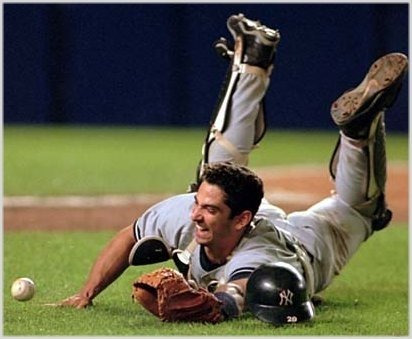
A stalemate over salary between Johnny Damon, above, and the Yankees could be broken if Nick Johnson is signed as a designated hitter.

For Washington and Florida last season, Nick Johnson had a .426 on-base percentage, third in the majors behind Joe Mauer and Albert Pujols.

According to several people with knowledge of the talks, Johnson would serve as the Yankees’ designated hitter and possibly hit second in the batting order. That was Damon’s spot last season.

“It’s part of baseball,” Damon said in a text message. “Teams try to make moves in hopes to improve their club. I wish them all the best.”

The Yankees and Johnson were on the verge of an agreement worth around $5.5 million, pending a physical. Damon made $13 million and was said to want a three-year contract without a pay cut.
Given Damon's contractual demands, I don't think anyone can blame the Yankees for moving on and signing Nick Johnson. Damon put together a fantastic season for the Yankees in 2009 and was the ideal fit for Yankee Stadium, but there's not a chance in hell that he was going to wind up with a contract that sniffed anywhere close to 3 years/$39 million. If anything, Damon should have used Bobby Abreu's contract as a starting point in negotiations with the Yankees and simply tried to max out his earning potential on a two year deal.

With the Yankees out of the picture, the market for Damon is a whole bunch of question marks right now.
  • The Mets and Mariners would seem to make sense for Damon, but are either one of those teams willing to go past two years for Damon? I doubt it.
  • The Giants were thought to be a logical fit for Damon, but GM Brian Sabean has already taken them out of the running for Damon
  • If the Cardinals fail to re-sign Matt Holliday, could Damon become an option? Maybe, but only at the right price.
After those four clubs, it's hard to see any other team having serious interest in signing Damon, which is an obvious problem for agent Scott Boras. I would expect the strategy out of the Damon camp to remain patient and wait until Jason Bay signs somewhere so that Boras can sell the teams that missed out on Bay on Damon. The problem with that logic is that the Jason Bay market stinks and that those two players should not be mentioned in the same breath when it comes to contracts.

Then again, Boras could sit back and hope that the Mets become so desperate for a splash that they cave into Damon's demands, but even that is highly unlikely.

As good of an agent as Scott Boras is, even he cannot create a market for player that does not exist. Sure it only takes one team to give Damon the contract he is looking for, but right now that team is not out there.

Thursday, December 17, 2009

Alternatives for Benjie Molina?

The great Ken Rosenthal asked today "Do the Mets Have Alternatives for Benjie Molina?"
The Mets will not give free-agent catcher Bengie Molina a three-year contract. The question is whether reasonable alternatives even exist for both parties.

Few teams need catchers, and probably none is willing to give Molina, 35, a three-year deal. The Mets, meanwhile, probably cannot find a better catcher than Molina in either free agency or trade.
But to me the real question at hand is this: does Benjie Molina have any alternatives to the Mets? As Rosenthal notes, there is no team out there that's willing to give Molina a three year contract (Mets included), but despite this, Molina is holding out hope that the Mets will cave in and give him a three year deal out of desperation.

This is undoubtedly a risky ploy by Molina, who must think that he has the Mets right where he wants them, desperate and with limited catching options. However, if the Mets opt not to sign Molina, then the market for Benjie Molina all of a sudden becomes very murky. Are there any teams out there that would give Molina a two year contract besides the Mets?
  • The Mariners might have interest, but given Molina's low OBP and declining defensive skills, I'm not sure if Molina is a fit here.
  • Because of the injury to Jarrod Saltalamacchia, the Rangers might have interest, but I don't think they'd be willing to commit to Molina for two years.
  • The Astros seem content to go into the season with Towles and Quintero behind the plate and with Jason Castro on the rise, a two year deal for Molina seems far fetched here.
  • The Rockies were willing to give Yorvit Torrealba a two year deal, but the two sides seem far apart because of $400,000. Molina could be an option here as a platoon player, but probably only for one year because Chris Iannetta is signed for the next three.
Moral of the story: take the two year contract from the Mets, Benjie. Don't be greedy.

Social Network With Jorge Says No!

With all the social network mumbojumbo now out there, it's become imperative that every blog out there devote themselves to facebook and twitter. And yes, I have followed suit hoping to give you, the readers, every chance you can to interact with Jorge Says No!
And as always, if you have any questions feel free to contact me at: jorgesaysno@gmail.com or simply leave a comment!

Thanks for reading,

-Jorge Says No!

Nick Johnson Can Do So Much Better

Could Nick Johnson be returning to the Bronx? Maybe:
The Yankees and Nick Johnson are talking about the sweet-swinging lefty and on-base machine replacing Hideki Matsui as the world champions’ designated hitter on a one-year deal.

If an agreement is reached, it would be an indication the Yankees will part ways with Johnny Damon, who they view at least as a part-time DH and don’t want him for more than two years and $20 million. The Post reported Tuesday that industry sources indicate Damon isn’t looking to take a pay cut from the $13 million he made last year. Agent Scott Boras is hunting for a three- or four-year deal.

“We have had dialogue, things are moving forward,” agent Rex Gary said of talks between the Yankees and their former first baseman. “Something could happen to speed things up, but it’s hard to predict.”
If Johnson is willing to take a one year deal to return to the Bronx, then by all means he should do it. But at the same time, he needs to understand that he could potentially be leaving both money and years on the table. Even though Johnson is injury prone, there are many teams looking at Johnson this winter because of his ability to get on base, hit for a high average, and relatively low cost.

Here is a list of teams that have shown interest in Johnson this winter besides the Yankees:
Given that each one of those teams has a hole at first base, I think it's likely that Johnson could land a multi year contract and a chance to play first base everyday instead of DHing for the Yankees. However, is it possible that Johnson is simply looking for a strong opportunity to show what he can do when healthy on a one year deal in the hopes that he can cash in on the free agent riches next year? If so, then maybe the Yankees situation becomes more appealing to Johnson and his agent.

However, given Johnson's injury history, I think his best bet would be to take as much guaranteed money now as he possibly can. The odds of Johnson playing 150+ games next season are quite low while the risk of him getting hurt and losing a chunk of change in the long run is much higher. Playing it safe now would mitigate the risk for Johnson and enable him to maximize his value on the market right now.

Hypothetically Speaking: The Josh Beckett Contract Extension


(Update 12/17): After the Red Sox went out and signed John Lackey to a 5 year/$82.5 million dollar contract, GM Theo Epstein texted this interesting nugget to Josh Beckett, who will be a free agent at the end of the season:
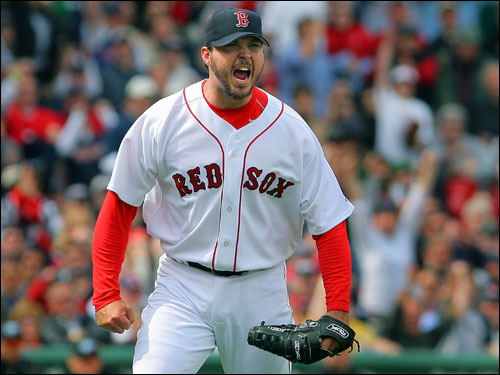
“I sent Josh a text message as we were finalizing John Lackey’s deal,” Epstein said. “I just told him, ‘Some might speculate this might mean the end for you in Boston.’ I said ‘Don’t listen to them. You’re a huge part of what we have going on here. We love it if it worked out if you’re a huge part of our future, as well. The most important thing is that we have one heck of a pitching staff right now.’ He texted back. He was very excited about the sign. He knows John a little bit. he thinks he’s a good man and a great pitcher and he’s ready to go for spring training. I don’t think it impacts Josh nearly to the degree people are speculating.”
With that statement in mind, I thought it was necessary to re-post this piece about a contract extension for Josh Beckett from November. I'd love to hear some opinions on this hypothetical contract extension. Should the Red Sox look to lock Beckett up right now? Post your thoughts in the comments section.

************ ***********

With Josh Beckett set to become a free agent at the end of the 2010 season, it looks as though Beckett and the Red Sox are ready to start talking contract:

"Josh Beckett, who was in Boston to be honored for his commitment to Children’s Hospital, told WEEI.com that he and his agent, Michael Moye, are planning to meet with Red Sox general manager Theo Epstein in the coming weeks to discuss the . pitcher’s future with the team.

“We’re just letting things die down a little bit,” Beckett said. Beckett is entering the last year of his contract with the Red Sox after having his option for the 2010 season vest thanks to making 28 starts in ‘09

Prior to the 2009 season, which saw Beckett go 17-6 with a 3.86 ERA, the pitcher made his desire to broach his future with the Sox known following the campaign."
Obviously, the Red Sox would love to sign Beckett to a long term contract extension that would keep him in Boston for the foreseeable future. Beckett is one of the premier pitchers in the AL and is still only 29 years old, which means that there should be plenty of good years left in the tank.

So what will it take for Beckett to remain in Boston long term? Let's take a look at each side's goals moving forward if they want to get an extension done NOW:

The Red Sox

1. limit the years (the most the Sox should offer Beckett is 5 years with a preference for a 4 year deal.)

2. discount? if possible

The Josh Beckett Camp

1. Become one of the highest paid pitchers in baseball

2. financial security

3. Increase 2010 salary if possible

So how about this deal for Beckett and the Red Sox?

(5 years/$87 million)

Here is the contractual breakdown:

2010: $15 million
2011: $16 million
2012: $18 million
2013: $18 million
2014: $20 million

Why it works for the Red Sox:

1. sign Beckett manageable extension

2. sign Beckett for less than what he would have gotten on the free agent market (maybe?)

Why it works for Josh Beckett

1. Becomes one of the highest paid starting pitchers in baseball (contract in line with those signed by AJ Burnett and Carlos Zambrano)

2. Increases 2010 salary by $3 million

3. He can become a free agent again at 34, which introduces the possibility of yet another long term deal

4. Beckett stays in Boston, where he loves to play

Is this contract extension realistic? Should the Red Sox try to sign Beckett to a contract extension? Is he worth it?

****** ******

(Jorge Says No! on Facebook)

(Follow Jorge Says No! on Twitter)

The Market for Orlando Hudson Stinks...Again

Could this offseason be deja vu for Orlando Hudson?

Last winter, the second baseman was coming off a stellar season offensively and defensively that was cut short by injuries. Nevertheless, Hudson was rated as a type A free agent was looking to cash in on his big year with a large multi year contract that was in the $25-$35 million dollar range.

However, the Dodgers offered Hudson arbitration, which severely depressed the market for his services because teams were not willing to give up a high draft pick to sign him. And over the couse of a few months, the baseball world watched as Orlando Hudson went from a multi year deal hopeful to a guy who was forced to take a one year deal with the Dodgers for less than $4 million dollars that included boatload of incentives.

Ouch.

Once the 2009 season ended, the free agent process started all over again for Hudson, but this time, things seemed to be looking up despite Hudson's rocky final six weeks with the Dodgers. Thanks to the Dodgers financial issues, Hudson was not offered arbitration by the Dodgers and was now free to sign with any club without the possibility of draft pick compensation hanging over his head. By not offering Hudson arbitration, the Dodgers seemed to be opening up the market for Hudson and it seemed to be only a matter of time before a team stepped up and offered Hudson a multi year contract.

But Hudson has yet to see any real action so far in free agency and there is reason to believe that the market for Hudson will not heat up. Take a look at the teams, who might be interested in signing Orlando Hudson:
  • Mariners: Sure they have Jose Lopez at second, but if they move him to first or trade him, than Hudson might become an option here given his strong leadership ability and historically great defense.
  • Twins: The Twins already have two potential second basemen for 2010 (Casilla and Punto), but if they have room in their budget, then adding Hudson would be a nice move for the Twins both offensively, defensively, and in the locker room.
  • Giants: The Giants really should be going after power hitters, but if they opt to sign Hudson, then the Giants can shift Freddy Sanchez to third base.
  • Mets: If the Mets can move Luis Castillo, then I'm sure they would sign Hudson in a heartbeat. However, moving Castillo seems to be nearly impossible at this point.
  • The Rockies, Nationals, Phillies, and Red Sox were also linked to Hudson early in the offseason, but none of those clubs seem doubtful to make a strong run.
  • The Dodgers are not likely to bring back Hudson at this point given their dire financial straits and because they signed Jamey Carroll to a two year deal.

If the financial terms are low enough, then maybe the Diamondbacks and Cubs get involved on the Hudson bidding, but right now, it does not look like either club will be involved.

Considering that Hudson was benched in favor of Ronnie Belliard down the stretch for the Dodgers last season and that his defensive ability seems to be on the decline, can anyone actually see a team giving Orlando Hudson anything more than a one year deal with a vesting option for 2011? Sure guys like Jamey Carroll and Ramon Santiago landed two year deals, but right now, there don't appear to be too many teams that are both actively looking for a starting second baseman and have loads of cash to spend.

In short, this could be another cold winter for Orlando Hudson.

Where do you think Orlando Hudson will land? What kind of contract will he get on the open market?

Mike Gonzalez and the Orioles' Future

When the free agent season began, one of the hot names on the market was Mike Gonzalez. The left hander was one of the top relief pitchers in baseball last season and was a hot commodity on the market because of his ability to strike out hitters and his dominate stuff. Gonzalez, who was a type A free agent, was not surprisingly offered arbitration by the Braves, who were hoping to acquire two high draft picks for losing Gonzalez.

Back in November, I pondered how Gonzalez's type A status would affect the number of teams interested in him on the free agent market. I concluded that even though Gonzalez was one of the hottest free agents out there, that his best chance to maximize his earning potential would be to sign with one of the worst teams in baseball statistically in 2009 so that they would not have to surrender a top draft pick for his services:

The best fit for Gonzalez in the free agent market might be to sign with a team that owns a first round pick somewhere in the range of 1-15. Because of the ridiculous Elias rankings system for free agent compensation, these teams only have to give up a second round pick for signing a Type A free agent.

Once Gonzalez is offered arbitration, that stable of teams will dwindle as teams ponder whether to actually give up a first round pick for Gonzalez. Even though there are lots of teams interested now, I think if Gonzalez wants to land the best deal possible and potential opportunity to close, then he should really consider signing with one of 2009's worst.
And last night, Gonzalez did exactly that when he came to terms with the Orioles on a 2 year/$12 million dollar contract:

Considered one of the top relievers on the free-agent market, Gonzalez, 31, went 5-4 with a 2.42 ERA, 17 holds and 10 saves in 80 appearances for the Braves last year, while primarily serving as a left-handed setup complement to Rafael Soriano. He struck out 90 batters in 74 1/3 innings, and opponents hit just .209 against him.

It's unclear whether the Orioles view Gonzalez as their full-time closer or whether he'll be part of a closer-by-committee approach that includes right-handed relievers Jim Johnson and Koji Uehara. Either way, Gonzalez will strengthen a bullpen that fell apart last year after All-Star closer George Sherrill was traded to the Los Angeles Dodgers in late July.
By bringing Gonzalez into the fold with a two year deal, one has to wonder how the Orioles envision this move effecting their future. Here's how: the Orioles have a stable of young and talented players, but the one area that has consistently killed them over the past few seasons has been the bullpen. There have been so many times where the Orioles bring leads into the late innings, only to see the bullpen blow it. After awhile, losses like that become very discouraging for a young ball club that is filled with great potential in the starting rotation.

That's where Gonzalez comes in.

The Orioles are hoping that with Gonzalez on board and Koji Uehara now thrown into the mix, that the back end of their bullpen will be stabilized and the Orioles will now be able to hold onto leads instead of blowing them like they have so many times in the past. Even though the Orioles are not expected to compete this season, it's still vital that the Orioles learn how to win baseball games because winning leads to confidence, which can only help the Orioles young players as they move forward.

Economically, this deal makes sense for the Orioles. The Orioles are not committing a large sum of money or years to Mike Gonzalez and best of all, the Orioles get to keep their top pick even though they signed a type A free agent, who was offered arbitration. Because the cost was lower for the Orioles to sign Gonzalez than it was for most teams, the Orioles gave up less to sign him. Morale of the story: sometimes there are advantages to playing badly. (Picks 1-15 protected)

As for Gonzalez, this deal represents a potential opportunity for him to close and prove to teams all around the league that he can be a lights out closer. By the time the deal expires, Gonzalez will be 33 years old and if he puts together two great seasons with the Orioles, there's no reason to think that Gonzalez won't be in line for a big money contract after the 2011 season.

Why Garrett Atkins Makes Sense for the Orioles

On Monday, I profiled some of the potential landing spots for Garrett Atkins, who was non-tendered by the Rockies. I expected the Orioles to be one of the main suitors for Atkins' services given their need for a third baseman and a power hitter. As I wrote at the time:

Orioles: The Orioles are yet another team that needs a third baseman. Atkins
would instantly become one of the top right handed power hitters in the Orioles'
lineup and give the O's more balance. If the Orioles are serious about bringing
more talent on board, then Atkins would be a good option for them to explore.

So it came as no surprise to me that the Orioles and Atkins came to terms yesterday on a one year deal. As Jeff Zrebiec and Dan Connolly noted:
Atkins, 30, was nontendered by the Colorado Rockies on Saturday and immediately became a fairly hot target, drawing interest from 10 or more teams, according to his agent, Jeff Blanks.

He intrigues the Orioles because he can play both first and third base, and the clubhas openings at each spot -- at least until minor league prospects Brandon Snyder and Josh Bell are deemed ready.

But what most interests the Orioles about Atkins is his right-handed power bat, something the club sorely lacked in 2009. Atkins had a down year last season, hitting nine home runs with 48 RBIs and a .226 average while playing half his games at hitter-friendly Coors Field. He temporarily lost his starting job and registered just 354 at-bats, the first time since 2004 he didn't have at least 500 at-bats.

While I doubt anyone expects the Orioles to compete for a playoff spot in 2010, I like this move for the Orioles for a number of reasons.

Firstly, Atkins has a large upside that could give the Orioles lineup a needed boost and help surround the Orioles young hitters with a productive right handed power hitter. It's about time that Orioles fans see some improvement out of their team and if Atkins is a force offensively, then the Orioles should be on the right path towards improvement.

Also, because the commitment to Atkins is so short, the risk involved in this deal is minimal for the Orioles. If Atkins produces, then the Orioles have the option of trading him for prospects at the trading deadline or holding him in return for draft picks once the season ends. And if Atkins does indeed flounder with the Orioles, then it will be a sunk cost for GM Andy McPhail, but the deal will have zero impact on the Orioles future and the team's ability to spend money on players.

In addition, much has been made about Atkins defensive problems, which might have been overblown to some degree. Sure Atkins has never been a good defensive player, but over the past few seasons, his defense has improved from -14.6 UZR in 2007 to -0.7 UZR in 2009. The Orioles did not sign Atkins for his glove, but if he can keep on improving his defensive game then I'm sure the Orioles would be pleased.

The risk for the Orioles in this deal is that Atkins has been a far more productive hitter at Coors Field throughout his career and his offensive numbers have been declining in each of the past three years. While this deal is not guaranteed to work out, it does have a high degree of upside for both sides in that Atkins will get the chance to play everyday and the Orioles will be adding a potentially potent bat to the heart of their lineup, who is nothing more than a stop gap. If Atkins can hit .275 with 20-25 home runs, then this deal would work out swimmingly for both sides.

Wednesday, December 16, 2009

Will Alfredo Amezega Land a Multi Year Contract?

On Monday, I profiled some non tenders that could command multi year contracts. Well, we might have a surprising name to add to the list: Alfredo Amezaga.

Because Amezaga is recovering from microfracture surgery to his left knee, the Marlins felt it was too risky to tender him a contract at Saturday's midnight ET deadline. A natural middle infielder who is an above average defensive center fielder, Amezaga made $1.3 million this past year, appearing in just 27 games.

With Amezaga entering his final season of arbitration, the Marlins were looking at paying him at least what he made this past year. Florida's hope is to sign Amezaga back at a lower salary, or just above $1 million.

Chances of that happening might be diminished because the money-strapped organization isn't in position to win a bidding battling.

"Between midnight [Saturday] and 2 a.m., I didn't get off the phone," Nicotera said. "There is an understanding with the Marlins that we would get a sense of the interest level in Alfredo from other clubs."

One of the top utility players in the league, Amezaga is an attractive
option for clubs because he is a switch-hitter and he can play so many different positions at a high level.
There would seem to be a significant amount of risk involved in offering Amezaga a multi year contract because he is coming off an injury plagued 2009 season in which he played in only 27 games. Amezaga underwent microfracture surgery on his left knee and it remains to be seen how he will recover from the surgery.

However, there is much more upside to signing Alfredo Amezaga than any common statistic can show. Aside from being a nice hitter and a quality defensive player all over the diamond, Amezaga is the premier team player. If you watched Marlins games over the past few seasons, what you saw in virtually every game was Alfredo Amezaga having a great time and chatting it up with every person on the field with a pulse. In short, Amezaga is a joy to watch and seems to be a joy to be around. And by all accounts, Amezaga is a great clubhouse guy and a fantastic leader, which instantly makes him a valuable commodity.

And from a baseball perspective, Amezaga can do just about everything and gives the manager tons of flexibility. In the past, Amezaga has demonstrated the ability to bunt, steal bases, put the bat on the ball (rarely strikes out), and play above average defense at SEVEN (yes, seven) positions. Amezaga is valuable in the American League, where a healthy Amezaga would enable teams to feel confident carrying an extra pitcher because of his strong versatility. Even in the National League, Amezaga is extremely valuable in the National League as well because his versatility makes it easy for managers to make double switches and insert him into the game.

So will Amezaga land a two year deal? Probably not. I believe that teams will want Amezaga to prove that he's healthy before they commit to him for more than one year. But if I'm Amezaga's agent, I have to feel confident that Amezaga will land a nice contract because so many teams are interested in his services (at least 10) and his versatility is a unique trait that can help so many teams around baseball. Alfredo Amezaga may be just an average hitter and a guy who will never be a starter on a winning baseball team, but make no mistake about, this guy is a valuable commodity to have around for so many reasons.

Should the Nationals Try to Sign Aroldis Chapman?


Update (12/16): As it turns out, GM Mike Rizzo attended Chapman's workout yesterday. No one knows for sure what Rizzo came away with after seeing Chapman throw, but the question needs to be asked again, should the Nationals try to sign Aroldis Chapman? I say yes.

***** ******

With roughly $20 million dollars to spend this winter, the Washington Nationals are a team with options. On one hand, they can play it safe and opt not to go after any of the major free agents this winter. GM Mike Rizzo could wait until the conditions are more favorable for the Nationals and let his young players develop at the major league level at their own pace.

But on the other hand, Rizzo has the chance to do something. Sure the Nationals aren't going to be competitive in 2010 and might not field a winning club for another couple years at least, but there is opportunity present for the Nationals to make at acquiring assets via the free agent market.

The one player in particular that sticks out in my mind for the Nationals is Aroldis Chapman. The 21 year old Cuban is regarded as one of the top free agents on the market because of his electric stuff and ace potential. As Keith Law wrote about Chapman on November 21st:
Chapman is the wild card of the free-agent market, as his track record is largely unknown, he has barely thrown for clubs since defecting and he is represented by agents who haven't handled a free agent of this magnitude before. When Chapman is on, he'll show No. 1 starter stuff, with a fastball in the mid-90s (and yes, as high as 101 mph) with good tail and a mid-80s slider that will show plus with legitimate tilt, although the latter pitch isn't consistent.

---snip---

He might be a No. 1 starter; he might be an ace closer; he might be a mountain of frustration. Is that worth $60 million? Or the fourth- or fifth-biggest contract of the offseason? Not to me, but he's worth some eight-figure amount because of the almost limitless upside.
Only a few weeks later, the entire landscape of the Chapman sweepstakes have changed. Teams are no longer pondering whether Chapman will get a $50-$60 million dollar contract and the general consensus is that Chapman will command a deal similar to that signed by Stephen Strasburg this summer (4 years/$15 million). Also, Chapman decided to switch agents and is now represented by the Hendricks brothers, who are two of the top agents in baseball.

Here's why the Nationals make sense for Chapman: if they going to go after free agents this winter, they should look for guys who can help the franchise build a winner in the future. No free agent has the upside of Aroldis Chapman. And if his price tag truly does come down to around $15-$20 million dollars total, then he could be a real steal for the Nationals, should they decide to commit to him.

But think about this possibility: the Nationals could have Stephen Strasburg, Bryce Harper (1st pick in 2010 draft?), and Aroldis Chapman. Now that's what I call a high upside nucleus that the front office can build around and the fans in Washington can be excited about. Even if it takes Chapman some time to get to the major leagues, the focus for the Nationals needs to remain on the future, which for their sake, hopefully Chapman would be a big part of.

A $15-$20 million dollar commitment to Chapman would represent yet another major gamble by the Nationals with a high upside, young pitcher. There's no doubt that committing $30 million (roughly) to two pitchers who have never thrown a pitch in the major leagues is a significant risk, but the possible reward is simply too high for the Nationals to ignore.

At the same time, there are some severe problems with the Chapman to the Nationals scenario. For starters, the Nationals would likely have to compete economically with the Red Sox and Yankees, who have far superior resources and money to throw at Chapman. Also, the Nationals and the Hendricks brothers might not have the best relationship after the 2008 Aaron Crow negotiations broke down even though Mike Rizzo is now the general manager.

Nevertheless, it'd be encouraging to see the Nationals make a play for Chapman given his vast upside and his rapidly dropping price tag.

The Market for Troy Glaus

As Matt Holliday and Jason Bay dominate the headlines on the free agent position player front, one name that we have not heard much from is Troy Glaus. Until now, that is:

Free agent Troy Glaus traveled to Los Angeles last week to see Dr. Lewis Yocum for a physical exam, and he's making the records available to all 30 clubs to show teams he's healthy, says ESPN.com's Jerry Crasnick.

"We wanted Troy to get an updated physical so clubs could be more comfortable with his condition," said Glaus' agent, Mike Nicotera. Glaus, who owns a horse farm in New Jersey, has been lifting weights and working out at big leaguer Jack Cust's facility in Flemington, N.J., with "no restrictions," according to Nicotera.

Glaus missed most of 2009 after undergoing shoulder surgery last January. He returned to play 14 games for St. Louis in September and October. Although Glaus is willing to log some DH at-bats next season, Nicotera said his preference is to land a full-time job at first base or third base. Glaus hit 27 homers and drove in 99 runs in 151 games with the Cardinals in 2008.
I'm sure there are plenty of teams out there who would be happy to bring Glaus aboard as a designated hitter or a platoon player, but he might have a tougher time finding a team willing to commit to him as a full time corner infielder given his injury history. Glaus only played in 14 games last season and failed to hit a single home run in any of his 32 at bats.

With that said, Glaus is a name player, who was one of the top power hitters in baseball and averaged 30 home runs a year from 2005-2008. In addition, Glaus played a steady third base for the Blue Jays in 2007 (0.9 UZR) and the Cardinals in 2008 (5.0 UZR), which is another plus for talent evaluators. There will be teams this winter will look at Glaus as a option to play first base, but Glaus does not have much experience playing the position (6 games).

Are there any teams on out there that would be willing to have Glaus play full time at either first base or third base? Let's take a look:

  • Orioles: The O's are looking for a corner infielder, who can hit for power to replace Melvin Mora and Glaus would seem to fit the bill here. Aside from Adam Jones, the O's are heavily stacked from the left side so Glaus could provide some balance to the potentially potent Orioles offense.
  • Twins: I think Glaus would be a great fit here because he would be surrounded by great hitters (Mauer, Morneau, Kubel) and as a result, the potential for a monster season is very high. If Glaus regains his health and stroke, then the Twins could have one of the strongest lineups in baseball. The Twins have been linked to free agent Joe Crede, but let's be honest here, Glaus offers far more upside than Crede.

  • Giants: Aside from Pablo Sandoval, the Giants really have no power whatsoever in their lineup, which is obviously a huge problem. The Giants limited payroll flexibility has prevented them from going after either of the two top power hitters on the market: Matt Holliday and Jason Bay. Glaus would be a low cost option for a Giants team that is looking for cheap power hitters that will only require a short term commitment.
  • Mariners: The Mariners have made a number of splashes so far, but they still have a glaring hole: power hitters. Glaus could provide the Mariners with a low cost power hitter, who could play first base should Russell Branyan become too expensive.
  • Braves: If the Braves strike out in their quest to re-sign Adam LaRoche, then Glaus might become a option at first base. The Braves have been searching for a right handed power hitter for most of the offseason, which is a need that Glaus could fill if he's healthy.
I would expect the market for Glaus to heat up sometime in January when a majority of the top free agents are off the market.

Where do you think Glaus will end up?

Analysis of the Juan Pierre Trade

And with that, the most expensive fourth outfielder in baseball (aside from Matthews Jr, if he's even good enough to be considered a fourth outfielder) was finally traded.

White Sox acquire: Juan Pierre

Dodgers acquire: prospects John Ely and Jon Link

******* *********

White Sox Perspective:
  • Acquire "true" leadoff hitter, who can score lots of runs
  • Adds speed to the offense
  • Little things: bunt, take the extra base, etc.
  • Durability and leadership
  • Only paying $8 million over two years for Pierre
  • Did not give up any exceptional prospects

Conclusion: I mentioned the White Sox a week back as a potential landing spot for Pierre, but the White Sox did not have to trade overpriced relief pitcher Scott Linebrink. It's hard not to like this deal for the White Sox. Sure Pierre has been a backup for nearly two years, but he brings a number of intangibles to the table that will make him especially valuable to the White Sox. From an economic standpoint, the White Sox made out quite nicely in this deal because the financial risk is very low thanks to the Dodgers, who picked up a majority of the contract. The Sox essentially replaced Scott Podsednik with another speedster, who probably will cost them less money.

Dodgers Perspective:

  • Finally get rid of Juan Pierre!
  • Aliviates the pressure to play Pierre everyday
  • Save $8 million in the process

Conclusion: The Dodgers' financial situation obviously made this deal more appealing to the team, given that they will now save $8 million dollars over the next two years. Pierre was a nice player to have around, but he was far too expensive to be a backup. If the Dodgers were not in such a dire financial state, I'm guessing that the Dodgers would have strongly pursued an overpriced pitcher in return for Pierre, but saving money was far more important to the Dodgers right now.

The Market for Jason Bay Stinks

Six days ago, I profiled the market for Jason Bay. At the time, the market for Bay consisted of the Red Sox and whole bunch of question marks as no team had stepped up as the primary suitor for Bay.

Since then, the market for Jason Bay has taken a dramatic shift. The Red Sox, who were the team that I thought would land Bay, are now thought to be out of the running to sign the slugger after signing John Lackey and Mike Cameron. In addition, the Mets offered Bay a contract, thought to be in the four year/$65 million dollar range, which is more than the Red Sox initial offer, but less than what Bay's camp is looking for. The goal for Bay and his agent Joe Urbon has been to secure a five year pact, which might be difficult given how poor the market for Bay is.

The only sign that we have gotten so far that Bay might land a 5 year deal is that a "mystery team" supposedly offered Bay a 5 year contract. Take that report for what it's worth. The teams that would seem to be the best fits for Bay-Angels, Mariners, Giants, Yankees-have all publically shied away from Jason Bay:
  • Angels: "They spoke with the agent for free agent Jason Bay at the winter meetings. But one source indicated afterward that Bay wasn't on their radar screen "at all" despite that conversation."
  • Mariners: "Meanwhile, in the case of other players Seattle had been linked to Tuesday, the team did not appear to be seriously pursuing outfielder Jason Bay or reliever Darren Oliver..."
  • Giants: "He emphasized that the Giants have no desire to overspend on any player, explaining their absence from the Matt Holliday and Jason Bay sweepstakes."
  • Yankees: "The Yankees have no interest in signing Bay to a long-term contract, the New York Daily News reported on Tuesday, not wanting to commit more than $60 million to another outfielder."

Of course, those statements can change in a heartbeat. Besides the Mets, the only other team that I can realistically point to as a destination for Bay is Seattle (who have actually been linked to Bay in the past few days). Not only do the Mariners need a power hitter,but Bay is from Vancouver and seems to want to play in Seattle. If the Mariners decide to actively pursue Bay, I'm fairly certain that they would be able to sign him. But do the Mariners have enough money to comfortably fork over $15-$17 million dollars annually to Bay? In addition, given their emphasis on defense, Bay does not look like a fit for the Mariners given his defensive struggles over the years in left field.

So as it stands right now, the market for Jason Bay is as follows: the Mets, a mystery team, maybe the Mariners, and a whole lot of question marks. We'll see if Bay is able to build a stronger market for his services in the coming days and hopefully create a bidding war for his services, which would help ensure a fifth year. But it looks like teams are more concerned with not overpaying for Jason Bay than they are with actually landing Jason Bay.

Hypothetically Speaking: Would You Trade Gary Matthews Jr and Juan Rivera for Derek Lowe


UPDATE (12/16): Morosi and Rosenthal are reporting that Derek Lowe may become the primary target for the Angels now that Lackey and Halladay are off the market. So I thought this trade idea would be worth discussing once again. What do you think of this trade?

******** *********

As we all know by now:

-The Braves have six starters on their roster right now and they are looking to move either Derek Lowe or Javier Vazquez for a big bat. Lowe would provide the most economic relief and leave the Braves with the best possible rotation.

-The Angels have been actively trying to trade Gary Matthews Jr., who has been a bust during his three years with the Angels.

-The Angels have been shopping Juan Rivera in the hopes that they will be able to sell high on the outfielder and make a run at Jason Bay

With those needs in mind, let's make a deal.

Here is the (hypothetical) offer on the table:

Angels trade Gary Matthews Jr, Juan Rivera, and prospect(s) to the Braves for Derek Lowe and $5 million

Would you do it? Let's lay out the pros and cons for each side:

Why the Angels would do it:
-get rid of Gary Matthews Jr without picking up any salary
-acquire a solid veteran starting pitcher at his lowest value
-Allow the Angels to focus their efforts this winter on landing Jason Bay

Why the Braves would do it:
-Rivera fills their need for a right handed power hitter
-Very reasonable price for Juan Rivera (2 years/$10 million)
-Get rid of the $45 million owed to Derek Lowe over the next three years

********** *************

Why the Angels wouldn't do it:
-Are they getting enough in return for Juan Rivera?
-Is Derek Lowe at 3 years/$45 million worth it?
-Adds an additional $15 million in payroll in 2012
-Prevent them from re-signing John Lackey

Why the Braves wouldn't do it:
-Do they really want Gary Matthews Jr?
-Too many outfielders
-Is Juan Rivera the impact right handed bat they have been searching for?

*********** **********

Conclusion:

This is a trade that would allow both sides to get rid of their unwanted contracts and in the process, fill needs. The Braves have coveted a power hitting outfielder and Juan Rivera fits the mold (25 HR, 88 RBI) while Derek Lowe would give the Angels another solid and dependable starter, who could replace John Lackey in the starting rotation if he bolts. Lowe's contract is roughly $12 million more than Matthews and Rivera combined, so if the Braves throw in $5 million or so over the course of the contract, that figure should help the contracts offset.

At the same time though, there are many questions that surround this deal:
  • Are the Braves willing to take on Gary Matthews Jr., who has been one of the worst players in baseball over the last two years?
  • Do the Braves think Matthews can still be a productive player?
  • Are the Angels willing to pay Derek Lowe $45 million over three years?
  • Do the Angels think that Derek Lowe can be a front line starting pitcher?
  • Are the Angels willing to take on Lowe's contract and unload Rivera in order to get rid of Matthews Jr?
  • Are the Braves willing to take on Gary Matthews Jr's contract in order to get rid of Derek Lowe and the money owed to him?
And so on and so forth. The questioning can go on and on with this deal. What do you think? Is this a fair proposal?

Tuesday, December 15, 2009

John Lackey Fallout: What Will the Mets do Now?

When you look at the Mets offseason to date, what you see is a whole lot of nothing. The Mets have made no splashy moves, no free agent signings, and no impact trades as they determine how the market will play out. But while the Mets have remained stagnant, the Mets' chief rivals have all made impact moves that will improve their prospects for 2010:
  • Phillies: Acquired Roy Halladay

  • Braves: Acquired Billy Wagner, Takashi Saito, and Jesse Chavez

  • Yankees: Acquired Curtis Granderson

  • Red Sox: Acquired John Lackey

There's no dobut that the pressure is on GM Omar Minaya to make splashy moves not only to match the other clubs, but ultimately to improve the Mets and give this team a chance to compete in 2010. But as the money burns a hole in Minaya's pocket, one has to wonder what move the Mets GM will make next.

Option 1: The Mets could continue their heavy pursuit of OF Jason Bay, who was reportedly offered a 4 year/$65 million dollar contract by the Mets last week. Bay would be a welcome addition to the Mets offense, which struggled mightily last season to hit for power. With the Red Sox presumably out of the running for Bay, it's tough to see what other serious suitors Bay has at the moment.

Option 2: The Mets could opt to go for the big splash and make a serious run at the best free agent on the market, Matt Holliday. Like Bay, Holliday is one of the best power hitters in all of baseball and he plays very good defense as well. Adding Holliday would be a signal to the rest of baseball that the Mets are serious about competing in 2010. At the same time, Holliday would be far more expensive than Bay and likely require a commitment of at least 7-8 years.

Option 3: The Mets could continue their pursuit of Benjie Molina and hope that he finally agrees to the two year deal the Mets have been offering.

Option 4: The Mets could go after Joel Pineiro, who is the best free agent starting pitcher out there. Pinero would be a great fit for the Mets given his propensity to throw ground balls. However, Pineiro is reportedly looking for a four year contract and with Lackey off the board, all of a sudden Pineiro could have some serious leverage over the Mets.

Option 5: The Mets could opt to sign a low cost-high reward starting pitcher to a one year deal with plenty of incentives. Signing a guy like Erik Bedard or Justin Duchscherer could be very beneficial for the Mets, but does anyone actually know if either guy can stay healthy?

Option 6: Try to acquire pieces via the trade market. Good luck with that, Omar.

Conclusion: If the Mets decide to go after Holliday, then it would be very difficult for them to sign Pineiro or any of the other top free agent starting pitchers on the market. As a result, if Holliday comes to the Mets, then I would expect the Mets to dabble in the "low cost-high reward" starters, and sign Benjie Molina.

At this point, I would say that it's far more likely that the Mets continue their aggressive pursuit of Jason Bay and try to sign him to a four year contract. This would give the Mets the splashy power hitter they so desperately need and allow them to spend money on starters like Pineiro and Benjie Molina. However, the Mets MUST remain cautious in their discussions with Bay and Pineiro and not become to eager to make a deal happen just for the sake of making a deal happen. It's crucial that the Mets don't wind up bidding against themselves for either guys services or do something stupid like giving Bay a five year deal or giving Pineiro a four year contract.

Best case scenario: the Mets bring in Molina, Pineiro, and Bay all for prices that favor the Mets. How much better do those signings make the team in 2010? Can we honestly say that this team would compete for a playoff spot? Would the Mets even be in the same stratosphere as the Phillies?

I say no. What do you think?

Red Sox Opt Against Jason Bay or Matt Holliday; Sign Mike Cameron Instead

The Boston Red Sox have their new left fielder and no, his name is not Holliday or Bay:

The Boston Red Sox have reached a tentative agreement on a two-year deal with free agent outfielder Mike Cameron, a baseball source told ESPN.com on Monday.

The deal would be for $7 million to $8 million annually, according to The Associated Press.

Cameron will have to pass a physical exam for the deal to become official.

The addition of Cameron to play left field -- coupled with Monday's $80 million-plus investment in free agent starter John Lackey -- would make all but official Jason Bay's departure from Boston.

Cameron, 36, is a .250 career hitter with 265 home runs in 15 seasons with the White Sox, Cincinnati, Seattle, San Diego, the Mets and Milwaukee. He has a reputation as a positive clubhouse presence and is a three-time Gold Glove Award winner.

So lemme ask you this: would you prefer Jason Bay for $70-$75 million and an additional $25-$30 million or Mike Cameron ($15.5 million) and John Lackey ($85 million)? Given that equation, I'd take Lackey and Cameron, given how few impact starting pitchers there were on the free agent market.

However, I bet there are Red Sox fans out there than do not agree with this move simply because Mike Cameron is not a sexy name Jason Bay or Matt Holliday. While Cameron is not nearly the offensive force of Bay and Holliday, he does hit for some power, get on base, play splendid defense, and provide good leadership in the clubhouse. Mike Cameron is a good role player on a playoff caliber team, but asking him to be anything more than that is a problem.

And that's exactly why I think Red Sox fans are taking issue with this deal. Cameron is a solid role player at best and does not provide the impact bat that the Red Sox lineup needs right now. But if the Red Sox are able to acquire a power hitting corner infielder (Adrian Gonzalez!), then I think Mike Cameron will be a welcome addition to the Red Sox despite his limitations, age, and high strikeout rate because he brings to the Red Sox a dimension that they were sorely lacking with Jason Bay last season: solid outfield defense.

With that said, the Red Sox NEED to address their offensive needs and bring in a power hitter because simply relying on David Ortiz to regain his stroke and JD Drew to stay healthy is not going to cut it. The only way to make up for Jason Bay's offensive ability is to bring in talent that can help fill the void. Hello Adrian Gonzalez and Adrian Beltre.

My only question for Epstein is this: why give two years to Mike Cameron, who is 36 years old? Doesn't the second year make this deal extremely risky?

Roy Halladay Trade Fallout: The Mariners are Contenders

By acquiring Cliff Lee from the Phillies yesterday, the Mariners are making a bold statement to the rest of the American League: we're going for it. Sure the Mariners already signed Chone Figgins, but acquiring Lee is the reason why the Mariners are definitely going for it in 2010.

So how do I know this?

Well, it has nothing to do with cost. Amazingly, the Mariners did not have to part with an excessive amount of talent to acquire Lee, who is one of the best pitchers in baseball and had a phenomenal postseason with the Phillies. Right now, it looks like the Mariners will have to surrender only Phillippe Aumont and Tyson Gillies to acquire Lee.

What a steal.

Also, Lee is only making $8 million dollars in 2010, which means that the Mariners will be acquiring one of the top pitchers in baseball at a bargain price. Given how much payroll flexibility the Mariners have this winter, that number is very manageable for the Mariners to take on and even gives them the ability to chase after more high priced free agents this winter. Even with Lee and Figgins on board, the Mariners are only committed to roughly $73 million dollars in payroll, which is $25 million dollars short of the Mariners' 2009 payroll.

In short, the Mariners have the ability to build a phenomenal team for 2010.

But the true reason why I know the Mariners are going for it in 2010 is because of Lee's contract. Cliff Lee is only signed through the 2010 season, which means that there is no guarantee that Lee will be in Seattle long term. Jayson Stark reported yesterday that Lee is looking for a deal comparable to the one signed by CC Sabathia last winter. And sorry to burst your bubble, Mariners fans, but with Felix Hernandez due for a contract extension after the 2011 season, there is simply no way the Mariners can afford to lock up both pitchers.

So if the Mariners are going to win with Cliff Lee, now is the time. What does that mean for the Mariners moving forward? They need to stay aggressive on the free agent and trade markets and continue to add pieces that will bring them closer to a title in 2010.

Next order of business on the agenda: find power hitters. Pronto.

Matt Holliday: Are the Cardinals Making a Mistake?

Is it possible for the Cardinals to re-sign Matt Holliday despite their payroll limitations? It's looking more likely:

The St. Louis Cardinals are taking another swing at free agent slugger Matt
Holliday
.

The Cardinals have tweaked their standing offer for the free agent outfielder, according to the St. Louis Post-Dispatch. The new proposal is worth around $16 million a season, according to the newspaper.

While Cardinals general manager John Mozeliak wouldn't go into detail about what was said, he did tell the Post-Dispatch that the renewed talks with agent Scott Boras were a good sign.

I'm still torn on this one. Matt Holliday is a fantastic player and would help the Cardinals immensely next season both offensively and defensively. He is the perfect hitter to hit behind Albert Pujols and there' no doubt that if Holliday is on the Cardinals in 2010, then their lineup will be one of the best in the National League. Also, there is the argument (Scott Boras theory) that if the Cardinals re-sign Holliday, then they will have a better chance to sign Albert Pujols to an extension that will hopefully give the team some sort of discount. If there is any truth to this, the Cardinals pursuit of Holliday could be franchise altering.

But on the other hand, how much are the Cardinals willing to commit to Holliday? This is a franchise that has historically had a payroll between $85-$95 million dollars, which will be a problem for the Cardinals moving forward unless ownership is willing to increase payroll. If the Cardinals sign Matt Holliday to a deal that averages $16 million per season, then he and Albert Pujols will take up roughly 1/3rd ($32 million) of the Cardinals payroll through 2011. In addition, after 2011, the Cardinals will have to extend Albert Pujols, who will likely command a contract well north of $20 million annually. It's not out of the realm of possibility to think that by 2012, Holliday and Pujols could command 40-45% of the Cardinals total payroll.

Now lemme ask you this, can a team compete when two players take up such a large portion of their total payroll?

I think it's possible, but it sure makes things very difficult. I know Holliday and Pujols are exceptional players, but even the best decline at some point and it is a significant risk to put so much of the franchise's fortunes into the well being and production of just two players.

If Holliday does indeed accept this offer, then the Cardinals would be one of the favorites to win the National League. However, I have to preach caution about the future economic impact of this deal for the Cardinals. But then again, it's hard to fault the Cardinals for going for it while they have the chance.

If the Cardinals to sign Holliday, hopefully GM John Mozeliak is able to keep the commitment to Holliday as short as possible and arrange the deal in a way that gives the Cardinals some payroll flexibility in the future.

Roy Halladay Trade Fallout: Did the Phillies Need to Include Cliff Lee?

The inclusion of Cliff Lee in the Roy Halladay trade has to be a hotly debated topic amongst Phillies fans. While I'm sure there are many who are thrilled to have acquired Halladay, the realization that the Phillies gave up their best starting pitcher in the process has to add some sting to the deal.

It's obvious that the Phillies decided to include Cliff Lee because it became apparent to them that it was going to be very difficult to re-sign Lee after the 2010 season. Lee's contract demands seemed to be far more than what the Phillies felt comfortable paying and instead of waiting around and hoping that they would have the opportunity to re-sign Cliff Lee, the Phillies dumped him for Halladay because they know they will have him long term.

On the surface, that logic makes sense for the Phillies. If you're going to pick between one year of Cliff Lee at $8 million or four years guaranteed of Halladay for $75 or so million total, I would pick Halladay.

But what should bother Phillies fans is this: did the Phillies have to include Cliff Lee in the trade? Could they have gotten this done by just trading away prospects and young players like J.A Happ? I think so. A deal that included any of the three: J.A Happ-Kyle Drabek-Michael Taylor-Dominic Brown should have gotten the job done. Is it fair to say that one year of Cliff Lee could be worth more than twelve years of service time combined between Drabek and Brown if the Phillies are able to win it all in 2010? I think so.

If they did not include Lee, then the Phillies would have been armed with one of the best rotations in baseball led by the Halladay-Lee-Hamels trio, which would have been a nightmare for opposing teams. I would hate to face that trio in a short series and the Phillies would be a near lock to return to the World Series.

But instead, the Phillies opted to mortgage the present by trading Cliff Lee in return for securing their future with Roy Halladay and by holding on to some of their top prospects. Bold move, Ruben Amaro.

Then again, the Phillies are now set to acquire the best pitcher on the planet, who could very well lead them back to the World Series without Cliff Lee. Despite the inclusion of Lee, there is plenty of reason for the Phillies to be optimistic about the 2010 season.

Monday, December 14, 2009

Roy Halladay to the Phillies?

Wow. Roy Halladay and Cliff Lee in the same trade. John Lackey signs with the Red Sox.

Can the hot stove get any hotter?

So much for this quote from Ruben Amaro about the possibility of getting Halladay:
That is what he said this morning before he left the Winter Meetings. The chances for a big-time move, Ruben?

"I don't think there's any likeliness," he said.

So nothing has changed in the likeliness scale?

"There's nothing likely. How about that?" he said.
Way to play it coy, Ruben.